. 富士山 と伝説 Legends about Mount Fuji .
::::::::::::::::::::::::::::::::::::::::::::::::::::::::::::::::::::::::::::::::::::::::::::::::::::
Mount Fuji, Fujisan
***** Location: Japan
***** Season: See below
***** Category: Earth and others
*****************************
Explanation

June 22, 2013
Mount Fuji makes UNESCO heritage list
UNESCO's World Heritage Committee has decided to add Japan's Mount Fuji to its list of World Heritage sites. It has also agreed to include a seaside pine grove in Shizuoka Prefecture that was not expected to be included on the list.
The committee made the decision on Saturday at a meeting in the Cambodian capital, Phnom Penh.
The debate over Mount Fuji lasted for about 50 minutes. Almost all of the 20 members offered their support for the mountain's registration.
They also suggested that the Miho-no Matsubara pine grove in Shizuoka Prefecture be included as a heritage site
Mount Fuji saddles the prefectures of Yamanashi and Shizuoka.
Yamanashi Governor Shomei Yokouchi said the UNESCO heritage site registration is a great honor for the people of Japan. He said he will do his best to preserve Mount Fuji's environment.
Shizuoka Governor Heita Kawakatsu said he is extremely honored. He said he wants to preserve Mount Fuji and hand it down to future generations.
From 8gome, the 8th level, Mount Fujisan belongs not to any prefecture but to the Asama shrine. The top of Mount Fujisan belongs to the Kami!
::::::::::::::::::::::::::::::::::::::::::::::::::::::::::::::::::::::::::::::::::::::::::::::::::::

. My Fujisan Gallery - facebook .
Alex Kerr wrote:
On Sunday Feb 21, 2015, Kazukiyo Izawa and I were in Tokyo and met with Ms Koike Yuriko, an LDP Diet Member who has been spearheading the government's policy to finally do something about Japan's endemic utility wires. She had read my recent book
"Theory of Japanese Scenery,"
which talks quite a bit about utility lines.

- source : Alex Kerr - facebook
::::::::::::::::::::::::::::::::::::::::::::::::::::::::::::::::::::::::::::::::::::::::::::::::::::
Mount Fuji 富士山, Fuji-san, or Fujiyama,
is the highest mountain in Japan. A dormant volcano that last erupted in 1708, it straddles the boundary of Shizuoka and Yamanashi prefectures just west of Tokyo, from which it can be seen on a clear day. It is located near the Pacific coast of central Honshū. Three small cities surround it, they are: Gotemba (East), Fuji-Yoshida (North) and Fujinomiya (Southwest).

Mount Fuji's exceptionally symmetrical cone is a well-known symbol of Japan and is frequently depicted in art and photographs, as well as visited by sightseers and climbers.

Mt. Fuji stands at 12,388 ft/ 3,776 m high and is surrounded by five lakes: Lake Kawaguchi, Lake Yamanaka, Lake Sai, Lake Motosu and Lake Shoji. They, and nearby Lake Ashi, provide excellent views of the mountain. It is part of the Fuji-Hakone-Izu National Park.
- - - Read more !
© Wikipedia
FUJI sounds like BUJI, to be safe, and has therefore an auspicious meaning.
富士、ふじ、冨士山
Fujiyama, Fuji no Yama, Mount Fuji, Mt. Fuji, Fujisan
Issa uses the old spelling 不二, meaning NOT TWO,
to express the uniqueness of this mountain.

source : Kit Nagamura, facebook
Look at the ORANGE Fuji and more haiku HERE :
Fuji Yoshida Fire Festival (Yoshida himatsuri, Yoshida chinkasai)
Fujizuka festival 富士塚祭り Fuji Hill Festival
The "Fuji Hill", miniatur-Fuji at the shrine Onoterusaki jinja 小野照崎神社 in Tokyo is about 7 meters high.
To climb it would bring the same spiritual merit as climbing Mt. Fuji itself.
. Fujizuka festival 富士塚祭り in Tokyo .
. Fujizuka, Fuji-zuka 富士塚 Mound to honor Mount Fujisan .
- Introduction -
:::::::::::::::::::::::::::::::::::::::::::::::::::::::::::::::::::::::::::::::::::::::::::::::::::::

Shared by Shad Hall - seen from Yamanashi
Joys of Japan, January 2012
Watch the Sunrise at Mount Fuji
source : www.youtube.com
:::::::::::::::::::::::::::::::::::::::::::::::::::::::::::::::::::::::::::::::::::::::::::::::::::

Ships in Harbour Near Mount Fuji
Emiko Satsuta

Night view of Mount Fuji. 1915
Kobayshi Kiyochika 小林清親 (1847-1915)

Santa at Mount Fuji
Kawase Hasui 川瀬巴水 (1883-1957)
:::::::::::::::::::::::::::::::::::::::::::::::::::::::::::::::::::::::::::::::::::::::::::::::::::
kigo for the New Year
First view of Mount Fuji, hatsu Fuji 初富士

on an auspicious sake cup, fuku masu 福枡 auspicious masu


source : Philippe on facebook

Lucky Dream for the New Year: Mount Fuji, Falcon and Eggplants
Suzuki Harunobu (1725–1770)
.................................................................................
kigo for all summer
natsu Fuji 夏富士 (なつふじ) Mount Fuji in summer
..... natsu no Fuji 夏の富士(なつのふじ)
aofuji 青富士(あおふじ) "green Mount Fuji"
.................................................................................
kigo for mid-summer
satsuki Fuji 五月富士 (さつきふじ)
Fuji in the fifth lunar month
..... 皐月富士(さつきふじ)
Mount Fuji during the Rainy Season
Fuji no yukige 富士の雪解 (ふじのゆきげ)
snow melting on Mount Fuji
..... yukige Fuji 雪解富士(ゆきげふじ)
fuji yukige 富士雪解(ふじゆきげ)
. . . . .
. Asakusa Fuji Mode 浅草富士詣
Pilgrimage to the Fuji Shrine in Asakusa
Edo Sengen sai 江戸浅間祭 (えどせんげんさい) Sengen festival in Edo
The Fuji Asama Sengen Shrine in Asakusa, Tokyo
浅草の富士浅間神社
observance kigo for mid-summer
Fuji gori, Fujigori 富士垢離 (ふじごり)
ascetic ablutions at Mt. Fuji
Fujigyoo 富士行(ふじぎょう)ascetics at Mt. Fuji
Fujigoya, Fuki goya 富士小屋(ふじごや) hut at Mt. Fuji
(during the ascetic rituals)

source : mnjr
Near the shrine Fujinomiya Sengen Jinja is a small pond (o-tsubo お壺), where the pilgrims perform ablutions before starting the first climb of Mt. Fuji in the season (see kigo below).
Some perform only these ablutions and do not climb the mountain (especially the elderly).
.................................................................................
observance kigo for late summer
Fuji moode 富士詣 (ふじもうで) pilgrimage to Mt. Fuji
Fujiy yamabiraki 富士山開(ふじやまびらき)
opening the season for climbing Mt. Fuji
Fuji dooja 富士道者(ふじどうじゃ)pilgrim to Mt. Fuji
Fuji gyooja 富士行者(ふじぎょうじゃ)ascetic pilgrim to Mt. Fuji
Fuji senjoo 富士禅定(ふじぜんじょう)ascetic climb to the top of Mt. Fuji
sanjoo moode 山上詣(さんじょうもうで)pilgrimage to the mountain top
sanjoo 山上(さんじょう)"honorable mountain top"
... o choojoo お頂上(おちょうじょう)
shinogoya 篠小屋(しのごや)reed hut
to practise austerities
Fujikoo, Fuji koo 富士講(ふじこう)Mount Fuji worship group
(especially in Edo)
Sengenkoo, Sengen koo 浅間講(せんげんこう)Sengen worship group
. Mount Fuji worship groups . Fujikoo
The pilgrims of old wore white robes and usually came in groups, with a leader. Many came all the way from Edo, to climb the sacred mountain once in their lives.
Many shrines in Japan had a special rock where Fuji worshippers could "climb" to the top and perform austerities and offer prayers.

The deity Sengen Daibosatsu 浅間大菩薩
was venerated at the Sengen Shrines in Japan.
quote
Daibosatsu is obviously a term of Buddhist origin, and refers to a "great kami that has awakened to the Way of the Bodhisattva."
The title daibosatsu is first seen in 781, when the kami Hachiman was honored with the title Gokoku Reigen Iriki Jintsū Daibosatsu ("Great Bodhisattva of National Protection and Marvelous Spirit Power").
From that time, the title daibosatsu has been applied to numerous other kami, including Fuji Sengen Daibosatsu and Tado Daibosatsu.
source : Sato Masato, Kokugakuin, 2005
quote
Fuji Sengen Shinkō
The cult of Mount Fuji/Mount Sengen.
The old reading of the characters 浅間 is asama. (they can also be read sengen).
One theory as to why Mount Fuji was called Asama is based on the fact that the words "asa" and "aso" mean a volcano or a volcanic eruption, but there is still no generally accepted explanation. There is also Asama faiths related to both Mount Asama (浅間山) in Nagano Prefecture and Mount Asama(朝熊山)in Mie Prefecture.
A story in the Hitachi no kuni fudoki relates that an "ancestor kami" (oyagami) requests lodging for one night from the kami Fuji of Fuji-dake (now Mount Fuji) and there is a poem with the words "the divine presiding kami" in the Manyōshū, which indicates that there was a faith of the deified Mount Fuji since times of old.
source : Nogami Takahiro, KokuGakuIn 2007
. . . . .
earth kigo for late summer
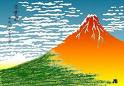
The Red Fuji, Akafuji, 赤冨士

. SAIJIKI ... category EARTH
Kigo for Summer
.................................................................................
kigo for early autumn
. Fuji no yama-arai 富士の山洗(ふじのやまあらい)
"washing mount Fuji"
"washing the mountain", oyama arai 御山洗 (おやまあらい)
Strong rain in autumn, that clears the mountain air.
.................................................................................
kigo for mid-autumn
. Fuji no hatsuyuki 富士の初雪 (ふじのはつゆき)
first snow on Mount Fuji
.................................................................................
kigo for all winter
. Fuji no kasagumo 富士の笠雲(ふじのかさぐも)
"bamboo hat clouds" around the top of Mt. Fuji
::::::::::::::::::::::::::::::::::::::::::::::::::::::::::::::::::::::::::::::::::::::::::::::::::::

source : facebook
Inrō in the Shape of Mount Fuji
18th–early 19th century - by Kajikawa School, based on a design by painter, calligrapher, and haiku poet Hanabusa Itchō (英 一蝶, 1652–1724).
:::::::::::::::::::::::::::::::::::::::::::::::::::::::::::::::::::::::::::::::::::::::::::::::::::::

source : facebook
coffee cup art
WASHOKU - - Food and Mount Fuji

- Sake barrel with Mount Fujisan 酒樽 -

source : facebook
Tokoname teapot by Yoshikawa Setsudo
:::::::::::::::::::::::::::::::::::::::::::::::::::::::::::::::::::::::::::::::::::::::::::::::::::::
Seen from outer space, July 2009
(NASA/JSC)

source : www.boston.com/bigpicture
*****************************
Worldwide use

- Satori Kappa 悟り河童 and Dave Dick, Canada -
*****************************
Things found on the way
Mount Fuji with its typical volcanoe shape can also be used to dedicate a local mountain of a similar shape.
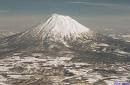
Ezo Fuji, 蝦夷富士, えぞ富士, えぞふじ, Hokkaido

Rishiri Fuji, 利尻富士, りしりふじ, Hokkaido

Sanuki Fuji, 讃岐冨士、さぬきふじ、Shikoku
Local Mount Fuji, Furusato Fuji ふるさと富士
Japanese List with local FUJI mountains!
:::::::::::::::::::::::::::::::::::::::::::::::::::::::::::::::::::::::::::::::::::::::::::::::::::::
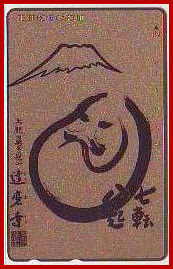
Daruma san and Mount Fuji
:::::::::::::::::::::::::::::::::::::::::::::::::::::::::::::::::::::::::::::::::::::::::::::::::::::
Katsushika Hokusai 葛飾北斎

One hundred views of Mt. Fuji
Fugaku Hyakkei 富嶽百景
and
Thirty-six Views of Mount Fuji
Fugaku Sanjūrokkei 富嶽三十六景

- Reference -
:::::::::::::::::::::::::::::::::::::::::::::::::::::::::::::::::::::::::::::::::::::::::::::::::::::
. Mount Fuji and the Dragon .

source : azakura-bojyo
:::::::::::::::::::::::::::::::::::::::::::::::::::::::::::::::::::::::::::::::::::::::::::::::::::::
The town of Fuji at the foot of Mount Fuji is using Kaguyahime as a tourist ttraction.
The story goes that her prince came after her and they lived happily in a stone cave in the mountain, which is named FUJI 不死 Mountain where you do not die.
. Kaguyahime in Fuji 不死 Town
:::::::::::::::::::::::::::::::::::::::::::::::::::::::::::::::::::::::::::::::::::::::::::::::::::::

Mt. Fuji seen from Tagonoura
Kawase Hasui 川瀬 巴水 (1883-1957)
. Tago no Ura 田子の浦 Tagonoura Bay .
*****************************
HAIKU
初富士のかなしきまでに遠きかな
hatsu fuji no kanashiki made ni tooki kana
first Mt. Fuji
until I have become sad
at such a distance
Yamaguchi Seison 山口青邨
Click HERE for more New Year Fuji Haiku !
:::::::::::::::::::::::::::::::::::::::::::::::::::::::::::::::::::::::::::::::::::::::::::::::::::::
hatsu fuji ya chazan no ue ni kakure nashi
On New Year's Day
Mt. Fuji presents a brilliant figure
above the tea hills.
Fuusei Tomiyasu
Classic Haiku: A Master's Selection - Miura, Yuzuru
:::::::::::::::::::::::::::::::::::::::::::::::::::::::::::::::::::::::::::::::::::::::::::::::::::::
富士の紺すでに八方露に伏す
fuji no kon sude ni happoo kiri ni fusu
the blue of mount Fuji
on all the sides
covered by the fog
. Kato Shuson, 加藤楸邨 .
kon 紺 is a rather dark indigo blue:

:::::::::::::::::::::::::::::::::::::::::::::::::::::::::::::::::::::::::::::::::::::::::::::::::::::
yukibare no fuji chuuten ni sobietatsu
after the snow
Mt. Fuji soars
into the clear skies
Shinya Ogata
:::::::::::::::::::::::::::::::::::::::::::::::::::::::::::::::::::::::::::::::::::::::::::::::::::

富士山文様
- source : whiteviola.blog.fc2.com -
.......................................................................
- - - - -Matsuo Basho - - - - -
富士の風や扇にのせて江戸土産
fuji no kaze ya oogi ni nosete Edo miyage
the wind from mt. fuji.
i brought it on my fan.
a souvenir from edo
Tr. Awol Monk
wind from Mt. Fuji -
carrying it on my fan,
a souvenir for those in Edo
Tr. Barnhill
Edo relic –
Fuji wind calm
on the fan.
Tr. Stryk
A wind from Mount Fuji
resting on the fan,
my souvenir from Edo.
Tr. Ueda
the wind of Mt. Fuji
I've brought on my fan!
a gift from Edo
Tr. Etsuko Yanagibori
MORE - Explanatins by Etsuko san :
. WKD : Basho and Mount Fuji .
Written in 1676, 延宝4年6月 Basho Age 33.
On the way to Iga Ueno. Probably written at the home of Shi-in 市隠.
This is a greeting hokku to his host, who maybe presented him with a fan to keep cool during the summer heat.
Takahata Shi-in 高畑市隠 (? - 1722)
He was a companion of Basho during his time with the young lord Todo Shinshichiro 藤堂新七郎 in Iga.
One of Shi-in's hokku is in the Sarumino collection.
.............................................................................

霧時雨 富士を見ぬ日ぞおもしろき
kiri-shigure Fuji o minu hi zo omoshiroki
misty rain.
the day when I don't see Mt. Fuji:
most fascinating!
(Tr. Susumu Takiguchi)
in the misty rain
Mount Fuji is veiled all day --
how intriguing!
(Tr. Makoto Ueda)
Misty rain;
Today is a happy day,
Although Mt. Fuji is unseen.
(Tr. thegreenleaf.co.uk )
from
. Nozarashi Kiko 野ざらし紀行.
Read more haiku about mount Fuji by
. Matsuo Basho 松尾芭蕉 - Archives of the WKD .
:::::::::::::::::::::::::::::::::::::::::::::::::::::::::::::::::::::::::::::::::::::::::::::::::::::::

. Serizawa Keisuke 芹沢圭介 / 芹沢鮭介 .
:::::::::::::::::::::::::::::::::::::::::::::::::::::::::::::::::::::::::::::::::::::::::::::::::::::::
. . . . . . . . Issa and his FUJI haiku
麦刈の不二見所の榎哉
mugi kari no fuji mi-dokoro no enoki kana
a Mount Fuji viewing spot
for barley harvesters...
nettle tree
初松魚序ながらも富士の山
hatsu-gatsuo tsuide nagara mo fuji [no] yama
right after
summer's first bonito...
Mount Fuji
有明や不二へ不二へと蚤のとぶ
ariake ya fuji [e] fuji [e] to nomi no tobu
dawn--
to Fuji! to Fuji!
fleas jumping off
かたつむり そろそろのぼれ 富士の山
katatsumuri sorosoro nobore Fuji no yama
Climb Mount Fuji,
O snail,
but slowly, slowly.
Issa, Tr. David Lanoue
:::::::::::::::::::::::::::::::::::::::::::::::::::::::::::::::::::::::::::::::::::::::::::::::::::::::

source : facebook
Fukagawa plate with Mount Fuji
A Meiji period (1868-1912) porcelain plate.
:::::::::::::::::::::::::::::::::::::::::::::::::::::::::::::::::::::::::::::::::::::::::::::::::::::::
- - - - - Yosa Buson - - - - -
不二(ふじ)ひとつうづみ残して若葉かな
fuji hitotsu uzumi-nokoshite wakaba kana
only Mount Fuji
is not burried
by the young leaves . . .
The cut marker KANA is at the end of line 3.
. WKD : wakaba 若葉 young leaves .
kigo for early summer

source : haikunomori/tamaki
Fujimi Saigyoo 富士見西行 Priest Saigyo gazing at Mount Fuji
不二を見て通る人有年の市
fuji o mite tooru hito ari toshi no ichi
(1738)
looking at Mount Fuji
some people just pass on -
year-end market
. WKD : toshi no ichi 年の市 Last Market of the Year .
. WKD : Priest Saigyo 西行法師 .
飛蟻とぶや冨士の裾野ゝ小家より
higi tobu ya fuji no susono no ko-ie yori
winged ants fly -
from a small house
at the foot of Mount Fuji
The cut marker YA is at the end of line 2.
. WKD : ha-ari, higi 羽蟻、飛蟻 flying ants .
. Yosa Buson 与謝蕪村 in Edo .
- more translations at Terebess
:::::::::::::::::::::::::::::::::::::::::::::::::::::::::::::::::::::::::::::::::::::::::::::::::::::::

Ogata Gekko 尾形月耕 Fuji
:::::::::::::::::::::::::::::::::::::::::::::::::::::::::::::::::::::::::::::::::::::::::::::::::::::::
eyes
so small, yet
Mount Fuji
Al Fogel
USA, February 2011
Though the eye is small,
the soul which sees through it is greater and vaster than all the things which it perceives.
In fact, it is so great that it includes all objects,
however large or numerous, within itself.
For it is not so much that you are within the cosmos
as that the cosmos is within you.
— Meher Baba
:::::::::::::::::::::::::::::::::::::::::::::::::::::::::::::::::::::::::::::::::::::::::::::::::::::

CLICK for more photos !
:::::::::::::::::::::::::::::::::::::::::::::::::::::::::::::::::::::::::::::::::::::::::::::::::::::
fune ukabe himemasu tsuri ya fuji biyori
floating in a boat
fishing for trout -
Mount Fuji in sunshine
im Boot schaukeln
nach Forellen fischen -
der Fuji im Sonnenschein
© Asano san : Haiku with Hundred
Tr. Gabi Greve
:::::::::::::::::::::::::::::::::::::::::::::::::::::::::::::::::::::::::::::::::::::::::::::::::::::::

otherworldly
above the rain-bent pampas
Mount Fuji in sun
- Shared by Kit Nagamura -
Joys of Japan, September 2012
:::::::::::::::::::::::::::::::::::::::::::::::::::::::::::::::::::::::::::::::::::::::::::::::::::
新雪の富士の肩荒きへら使ひ
shinsetsu no Fuji no kata araki heratsukai
first snow -
the side of Mount Fuji looks
so roughly palleted
Hosomi Ayako 細見綾子
Tr. Gabi Greve

*****************************
Related words
***** Mountains (yama)
***** First dream of the new year (hatsu yume)
***** Wisteria (fuji). Japan. wisteria trellis, fujidana and more kigo
.......................................................................

source : facebook
. tsuba 鍔 sword guard .
.......................................................................
. - - - Welcome to Edo 江戸 ! .
. SAIJIKI - the complete WKD-LIST
***** . Folk Toys from Shizuoka .
***** . Fuji Tengu 富士天狗(富士太郎)Tengu from Mount Fuji .
Daraniboo, Daranibō 陀羅尼坊 Darani-Bo, Daranibo

Hiroshige - 歌川広重「広重五十三次」
Sonnet: Fuji at Sunrise (1893)
Startling the cool gray depths of morning air
She throws aside her counterpane of clouds,
And stands half folded in her silken shrouds
With calm white breast and snowy shoulder bare.
High o’er her head a flush all pink and rare
Thrills her with foregleam of an unknown bliss,
A virgin pure who waits the bridal kiss,
Faint with expectant joy she fears to share.
Lo, now he comes, the dazzling prince of day!
Flings his full glory o’er her radiant breast;
Enfolds her to the rapture of his rest,
Transfigured in the throbbing of his ray.
O fly, my soul, where love’s warm transports are;
And seek eternal bliss in yon pink kindling star!
Ernest Fenollosa
‘Fuji at Sunrise’ appeared in The Discovery of America and Other Poems
(New York: Crowell, 1893).
source : themargins.net/anth
. Ernest F. Fenollosa (1853 - 1908) .
in the Darumapedia
:::::::::::::::::::::::::::::::::::::::::::::::::::::::::::::::::::::::::::::::::::::::::::::::::::::::
. 富士山 と伝説 Legends about Mount Fuji .
:::::::::::::::::::::::::::::::::::::::::::::::::::::::::::::::::::::::::::::::::::::::::::::::::::::::

Kusakari Masao 草刈正雄
Hero of the Jidaigeki Drama 2016, Sanada Maru 真田丸
:::::::::::::::::::::::::::::::::::::::::::::::::::::::::::::::::::::::::::::::::::::::::::::::::::::::
. My Fujisan Gallery - facebook .
[ . BACK to DARUMA MUSEUM TOP . ]
[ . BACK to WORLDKIGO . TOP . ]
- #fujisan #fujiyama #mountfuji -
:::::::::::::::::::::::::::::::::::::::::::::::::::::::::::::::::::::::::::::::::::::::::::::::::::::


 Posts
Posts


32 comments:
hatsuyuki no shirase arite fuji no yama
first snow
late on Mount Fuji ...
says the news
LOOK !
© Gabi Greve
.
Mount Fuji dawn--
a New Year's sake toast
at my lips
asa fuji ya toso no cho^shi no kuchi no saki
.朝不二やとそのてうしの口の先
by Issa, 1818
Or: "at his lips" or "at her lips." Spiced sake (toso) is a New Year's drink.
Tr. David Lanoue
http://cat.xula.edu/issa/
kigo for summer, TBA
富士詣 ふじもうで 晩夏 富士山開(ふじやまびらき)、
富士道者(ふじどうじゃ)、
富士行者(ふじぎょうじゃ)、
富士禅定(ふじぜんじょう)、
山上詣(さんじょうもうで)、山上(さんじょう)、富士講(ふじこう)、浅間講(せんげんこう)、篠小屋(しのごや)、お頂上(おちょうじょう)
.
富士垢離 ふじごり 仲夏 富士行(ふじぎょう)、富士小屋(ふじごや)
.
江戸浅間祭 えどせんげんさい 仲夏 浅草富士詣(あさくさふじもうで)
The permafrost near the summit of Mt. Fuji (3,776 m) has been thawing at an alarming rate during the last 30 years due to warming global temperatures, according to research conducted by Shizuoka University and Japan's National Institute of Polar Research (NIPR). Permafrost is a subsurface layer of soil that remains frozen for at least two years.
The research group's first glaciological survey, conducted from 1970 to 1976, showed the lower altitudinal limit of the permafrost at 3,100 to 3,300 meters. The second survey, from 1998 to 2001, revealed the retreat of the permafrost layer to the altitudes of 3,300 to 3,500 meters, 200 meters higher than the previous data. The recent survey, 2007 to 2010, showed a further, more rapid decline in permafrost extent.
MORE on JFS JAPAN
http://www.japanfs.org/en/pages/030550.html
a friend wrote:
Gabi, my deep appreciation to have someone like you in my life and before me eyes. Finding you was a bit akin to driving around the corner and seeing Fuji-san.
Hope the comparison doesn't irk you, but there you go!
.
によつぽりと秋の空なる富士の山
nyoppori to aki no sora naru Fuji no yama
towering alone
against the autumn sky -
mount Fuji
Tr. greenleaves
In the blue sky of autumn
Outstands the white solemn peak
of Mr. Fuji
Tr. Sasaki
Hôrinzen-ji Temple of the Sôtô-shu Zen Sect
( Popularly called "Hôrin-ji) Osaka
Tombstone of Ueshima Onitsura
MORE
source : general_sasaki
nyoppori にょっぽり, nyokkiri にょっきり
.
http://wkdhaikutopics.blogspot.jp/2007/02/uejima-onitsura.html
Five Lakes of Mount Fuji
snip
Mount Fuji is classified as an active volcano, though it has been dormant since its last eruptive outburst in 1707-08, when the spewed-out ash reaching Edo (present-day Tokyo) was so thick as to prevent daytime reading. Before then, it was anything but dormant, and lava flows from the volcano dammed up rivers, giving rise to the five lakes at its northern base. As three of these lakes are still linked by systems of underground channels, their water surfaces are at the same altitude.
MORE
Japan Times
http://www.japantimes.co.jp/text/fv20121216a1.html
.
Mount Fuji - Hōei eruption 宝永
The latest eruption, in 1707 (the 4th year of the Hōei era), was known as the great Hōei eruption. It followed several weeks after the Great Hōei earthquake:
November 11, 1707 (Hōei 4, 14th day of the 10th month):
December 16, 1707 (Hōei 4, 23nd day of the 11th month):
.
and
the reconstruction efforts of
Ina Hanzaemon Tadanobu 伊奈半左衛門忠順 in Gotemba
.
MORE:
quoting the Japan Times
Will Mount Fuji celebrate World Heritage status by blowing its top?
On May 1, Japan’s Agency for Cultural Affairs announced it had received notification that Mount Fuji had been recommended for World Heritage status by the UNESCO-affiliated International Council on Monuments and Sites. Formal approval is expected at the World Heritage Committee meeting in Cambodia next month.
snip
One wonders how the voting might have gone, however, had the delegates been perusing Japan’s tabloid press — which from late March have been emitting increasingly shrill warnings that a major earthquake may be imminent, and that such a catastrophic event might be accompanied by Mount Fuji’s awakening from its 306-year slumber with a huge volcanic eruption.
MORE
http://www.japantimes.co.jp/news/2013/05/12/national/will-fuji-celebrate-world-heritage-status-by-blowing-its-top/#.UY7wOUqGm41
Japan Times -
Managing Mount Fuji’s fame
Chances have increased that Mount Fuji will become a World Heritage site in June following an April 30 recommendation by a UNESCO panel. The International Council on Monuments and Sites (ICOMOS) noted that the volcano is a national symbol of Japan and blends religious and artistic traditions.
Mount Fuji is regarded as a symbol of nature worship in Japan and has long served as a source of artistic inspiration, including in ukiyo-e woodblock prints by such artists as Katsushika Hokusai and Utagawa Hiroshige.
It is expected that once the 3,776-meter high volcano becomes a World Heritage site, the number visitors will rapidly increase. About 300,000 people climb Mount Fuji every summer, and several million people visit its fifth station every year by bus or car.
ICOMOS expressed its concern about the effects of tourism and development projects on Mount Fuji and called for details to be worked out by 2016 on how to deal with a larger number of visitors, and how to keep its trails in good condition.
The Yamanashi and Shizuoka prefectural governments are considering imposing fees on visitors to Mount Fuji from the summer of 2014. They must decide how much to charge and how to collect the fees. Some people may oppose such a plan, but it would help control the number of visitors and generate funds that can be used to protect Mount Fuji’s environment.
MORE
http://www.japantimes.co.jp/opinion/2013/05/22/editorials/managing-mount-fujis-fame/#.UZwaYNiGe40
.
夏草や官幣大社富士浅間
natsukusa ya kanpei taisha Fuji Asama
summer grass -
the Imperial Shrine
Fuji Asama
Ozaki Meidoo 尾崎迷堂 Ozaki Meido (1891 - 1970)
Fuji - Religious object
by John Dougill
Symmetrical and snow-capped, Mt Fuji is an iconic symbol of Japan. Since ancient times it’s been held in awe, and many Japanese harbour the desire to climb it at least once. It was previously nominated as a Natural Heritage site, but environmental problems necessitated rethinking the application as a Cultural Heritage site based on its religious and artistic significance.
Fuji’s religious role stems from the country’s animist tradition of mountain worship, prompted not only by its dominating presence but by its volcanic activity. Since 781 there have been 17 recorded eruptions (the last being in 1707), and to appease the mountain deity Sengen shrines were built around the base.
Of the eight shrines in the World Heritage registration, Fujisan Hongu Sengen Taisha is the most important. Established at its present location in 806, it boasts an unusual two-storey sanctuary as well as ponds fed by underground water from Mt Fuji. It stands at the head of some 1300 Sengen shrines nationwide.
MORE
http://www.greenshinto.com/wp/2013/07/18/fuji-2-religious-object/
Fuji san made from cut glass
kiriko
Kobayashi Issa
brushed on a picture of Mount Fuji --
hatsu-haru ya chiyo no tameshi ni tachitamau
spring comes --
Fuji shows us how
to last a thousand years
This hokku is from Issa's posthumously discovered writings, so it was probably written during the last years of his life. It seems to be a New Year's hokku, so, along with the haiga ink painting of Mount Fuji, it may have been composed by Issa as a prayer for his own future or possibly as a greeting or a prayer for a respected person at that auspicious time. The hokku relies on an implicit comparison that had been used since the early days of courtly waka: an object such as a pine tree or a crane that, according to legend, lives a thousand years or a natural object that lasts a thousand years (usually a figure for countless years) is praised -- as evidence that someone (often the emperor or an imperial family member) will also surely live at least that long or even considerably longer. Mount Fuji, regarded as the body of a god, was one such natural object, and it was often written with characters ( 不死 ) that mean eternity or immortality. It was especially auspicious, moreover, as a spiritual presence at New Year's. Later Fuji and other mythical images of longevity also came to be used in haikai by commoners.
In this hokku Issa implicitly evokes the traditional mythical fusing of Fuji's divine time with limited human time. The beginning of the lunar new year or "spring" gives renewed evidence that Fuji has lasted well over a thousand years, and Fuji's example of enduring existence is something that gives humans, too, confidence to pray for long life, though clearly Issa isn't taking a thousand years literally. At this special time of the year ordinary realism is put aside, and Issa seems to enjoy comparing himself or even humorously overlapping himself just a bit with his life mentor, Mount Fuji.
Mount Fuji is not referred to directly in the hokku, since Issa's reference is obvious from the headnote and from the language of the hokku, but in English the reference seems weaker, so I mention Fuji explicitly in the translation.
Chris Drake
.
Mt. Fuji Photo (富士の写真館) on facebook
.
https://www.facebook.com/MtFujiPhoto/timeline
.
Ota Nampo (1749-1823)
painted Mt. Fuji for a poem:
Foreigners
have travelled so far
to see in the heavenly realms
the most exquisit
Mount Fuji.
Mori Tetsuzan (1775-1841)
.
Kobayshi Issa
朝富士の天窓へ投る早苗哉
asa fuji no atama e hooru sanae kana
young rice shoots
thrown this morning
toward Fuji's bright peak
This hokku was found among Issa's manuscripts after his death, so the date is unknown, but it seems to be about preparations for rice-planting on the outskirts of Edo or in an area nearby that isn't far from Mt. Fuji. Issa's hometown and the area around it were surrounded by mountains, so Fuji couldn't be seen from rice fields there. The hokku seems to evoke early morning on a day at the beginning of June on which rice-planting will begin. Since planting has to be done quickly and at almost the same time for the whole village, nearly everyone in the village cooperates in the effort. Teams of villagers are now going around delivering bundles of rice seedlings which have been raised in seedbeds and will now be transplanted in wet fields. Walking along a raised path between the wet fields, the delivery people stop at each field and throw the designated number of bundles into it at appropriate intervals so that the shamanic saotome women who will do the initial planting will be able to plant the shoots efficiently. To deliver the shoots to the far sides of the fields, people must throw the shoots hard and with a high trajectory. Beyond the fields rises Mt. Fuji in the distance, and morning sunlight is now on its upper slopes.
As the bundles of shoots arc through the air again and again -- perhaps also catching some direct sunlight -- it seems to Issa as if the people throwing them were trying to reach the sacred mountain's peak. Of course he doesn't mean the people are literally trying to plant rice on Fuji's probably still snowy peak, yet the hokku seems to be more than simply pictorial. Perhaps Issa is suggesting that anyone who throws growing seedlings in the direction of Fuji can't help but feel some sort of yearning to be able to reach out and vicariously touch the godly mountain or somehow connect with its power. On this morning the whole village is on the verge of a great rush of energetic communal motion, and the earth and its fields will soon be transformed. In this liminal period many extraordinary things apparently seem almost possible, at least to Issa. Perhaps his visionary image of rice shoots momentarily flying without limit through the air also captures something of the unconscious desire of those who throw them.
Though some may disagree, I don't see any personification of Mt. Fuji in this hokku. The word "head" in Japanese is a standard expression for 'peak, summit, tip, top' in much the way that English speaks of the head of a slope, a staircase, a page, a doorway, a mast, etc., or even a simple newspaper headline. Likewise I don't think speaking of the flank or foot of a mountain by itself implies significant personification. The debate about whether dead metaphors are really dead or not is an ongoing and subtle one, but common sense also seems important.
The following link is to a photo of preparations for ritual rice-planting at a Shinto shrine that continues traditional shamanic customs to a certain extent. Two "deliverymen" are shown, one carrying bundles of young rice plants and the other throwing them into the wet rice field, where they will be planted. A group of three(?) thrown bundles is visible flying through the air at the left of the frame. The bundles seem to be moving horizontally, since the ritual field is small and they aren't being thrown very far.
http://blog-imgs-54.fc2.com/p/i/n/pinbokejun/M04_7890dvWeb.jpg
Chris Drake
Teaburi Daruma with Mount Fujisan as decoration!
手あぶり - 手焙り Daruma as a Handwarmer
.
a Russian resource with many woodblock prints about Mount Fuji
http://leit.ru/
.
Hiroshige Print
and more shared by a friend in our Facebook Gallery
.
Manhole with Fujisan
from Lake Yamaguchiko
.
http://darumasan.blogspot.jp/2005/02/manholes-with-daruma.html
.
Mount Fuji hidden
in a nightingale floor -
Joys of Japan
Gabi Greve, April 2015
.
LOOK at it here
http://edoflourishing.blogspot.jp/2015/04/uguisubari-floor.html
.
踏んまたぐ程でも江戸の不二の山
fun matagu hodo demo Edo no fuji no yama
though I can almost
step over it...
Edo's Mount Fuji
During Issa's time, on the first day of Sixth Month pilgrims would climb artificial, miniature hills shaped like Mount Fuji. This particular hill seems almost small enough for Issa to step over. This particular hill was located in Asakusa, a section of Edo, today's Tokyo.
.
Kobayashi Issa
(Tr. David Lanoue)
.
初不二やいまに変らぬ駿河台
hatsu fuji ya ima ni kawaranu surugadai
first view of Mount Fuji -
Surugadai has not changed
one bit
黒木野雨 Kuroki Noa
Surugadai
http://edoflourishing.blogspot.jp/2015/10/surugadai.html
.
Mt. Fuji is one of the few large composite volcanoes made of basalt in the world. Its current beautiful cone shape was caused by eruptions during three periods: Komitake, Kofuji, and Shinfuji.
An explosive Edo Period eruption 1707 created Hoei Crater and formed the huge volcanic ash field on the east side. Mt. Fuji has been dormant since then.
.
http://www.fujisan-net.gr.jp/english/4_04.htm
.
The "Old Fuji" (Kofuji 古富士),
being taken over by the NEW one (Shinfuji 新富士)
。
Fujiha dera 不二派寺. 富士の不授布施派の寺
.
Kobayashi Issa
つんとして白梅咲の不二派寺
tsunto shite shira ume saku no fujiha-dera
stuck-up plum trees
blossoming white...
Fujiha Temple
.
A temple of the Nichiren sect; Issa zenshû (Nagano: Shinano Mainichi Shimbunsha, 1976-79)
(Tr. David Lanoue)
.
Hanabusa Itchoo, Itchō 英一蝶 Hanabusa Itcho
(1652 – 1724) )
.
http://darumapedia-persons.blogspot.jp/2016/12/hanabusa-itcho.html
.
KobayashiIssa
はつお花招き出したよ不二の山
hatsu obana maneki-dashita yo fuji no yama
the first plume grass
has called it forth...
Mount Fuji
A haiku of perspective: the plume grass in the foreground, Mount Fuji in the distance.
Shinji Ogawa adds that the beckoning movement of the plume grass resembles the Japanese hand gesture for "come here." The grass seems to be inviting Mount Fuji to come.
David Lanoue
.
『THE LITERATURE OF Mt.FUJI Japanese Classical Literature/富士山の文学 【古典文学篇】』
This text is downloadable for purposes of explaining characteristic of classical Japanese literature and cultural backgrounds as well as tendencies of Japanese minds found in the selected literature in English.
.
http://globalization.chuo-u.ac.jp/lab/#Japanese_Classical_Literature
.
Who was the first to climb Mount Fujisan?
maybe
Miyako no Yoshika 都良香(834 - 879)
He is Nr. 14 of the
. 日本の仏仙人16人 - The 16 Buddhist Immortals of Japan .
Yoshika wrote
Fujisan ki 富士山記 A Record of Mt Fuji
.
others are mentioned too . . .
https://gokurakuparadies.blogspot.jp/2018/04/sennin-14-miyako-no-yoshika.html
.
Kobayashi Issa - 1809
不二の草さして涼しくなかりけり
fuji no kusa sashite suzushiku nakari keri
it's Mount Fuji's grass
but no trace
of cool air
During Issa's time, on the first day of Sixth Month pilgrims would climb artificial, miniature hills shaped like Mount Fuji. Here, Issa sits on the grass of one of these tiny hills, complaining about the lack of cool air that one would enjoy on the real Mount Fuji.
David Lanoue
.
Pages from the Hokusai book on One Hundred View of Mt. Fuji
http://ukiyoe.cocolog-nifty.com/blog/2020/03/index.html
For other images of Mt. Fuji, see the website, from the bottom up at
http://ukiyoe.cocolog-nifty.com/blog/2020/03/index.html
.
Post a Comment