. Tatamicho, Tatamichō, Tatamimachi 畳町
Tatami district in Edo .
::::::::::::::::::::::::::::::::::::::::::::::::::::::::::::::::::::::::::::::::::::::::::::::::::::
Changing tatami floor mats (tatami gae)
***** Location: Japan
***** Season: Mid-winter
***** Category: Humanity
*****************************
Explanation
Woven mats of rice straw traditionally used to cover floors in Japan.
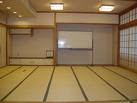

Tatami (畳 )(originally meaning "folded and piled, tatamu ") mats are a traditional Japanese flooring. Made of woven straw, and traditionally packed with rice straw (though nowadays sometimes with styrofoam), tatami are made in individual mats of uniform size and shape, bordered by brocade or plain green cloth.
Tatami were originally a luxury item for the wealthy at a time when lower classes had mat-covered dirt floors. Tatami were gradually popularized and finally reached the homes of commoners towards the end of the 17th century.
There are various rules concerning the number and layout of tatami mats; an inauspicious layout is said to bring bad fortune. In homes, the mats must not be laid in a grid pattern, and in any layout there is never a point where the corners of three or four mats intersect.

In Japan, the size of a room is typically measured by the number of tatami mats (畳 -jō, joo, jou). The traditional dimensions of the mats were fixed at 90 cm by 180 cm (1.62 square meters) by 5 cm (35.5 in by 71 in by 2 in).
Half mats, 90 cm by 90 cm (35.5 in by 35.5 in) are also made. Shops were traditionally designed to be 5½ mats (8.91m²), and tea rooms and tea houses are frequently 4½ mats (7.29m²). Because the size is fixed, rooms in traditional Japanese construction measure in multiples of 90 cm. Mats from Kyoto (Kyo-tatami, Kyoo datami) and other parts of western Japan are slightly larger than those from Tokyo and eastern Japan at 95.5 cm by 191 cm (1.82m²; 37.6 in by 75.2 in).
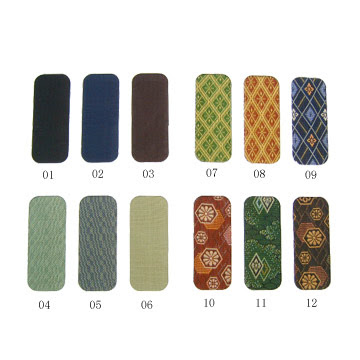
Edges for tatamis come in many patterns for different occasions.
Tatami is made with a rush plant, igusa.
Igusa is a perennial plant of the family of igusa. Igusa smells good. It has a fresh, grassy smell. In English, they are called rushes. Igusa blooms from May through June. The plant grows up to a length of 100 centimeters or less. They grow in marshes where sunshine is good. In Japan, there are 30 kinds of igusa growing in many different areas.
Tatami is made from natural igusa that must be flexible from the root to the tip, and the thickness and the color varies slightly. About 4000 to 7000 igusa are used for the tatami. Generally the best tatami uses more and longer igusa rushes.
There are many benefits in using igusa such as air purification, heat insulation, elasticity, cooling (especially in hot summer seasons), eco-friendly and sound absorbing qualities. Igusa tatami is also smooth to the touch, so it is comfortable for babies and young children. Most Japanese like tatami. Many homes have at least one tatami room.
© More in the WIKIPEDIA !
In Edo, the 伊阿弥 / 藺阿弥 Iami family was appointed by Tokugawa Ieyasu.
The family business dated back to the Muromachi period.
藺阿弥 also grew igusa rush material. The family name Iami was given by 織田信長 Oda Nobunaga.
The tatami maker family later served under Toyotomi Hideyoshi.
- reference source : tatami-tatami.cocolog-nifty... -
. Tatamicho, Tatamichō, Tatamimachi 畳町
Tatami district in Edo .
tatamiya 畳屋 - 畳職人 tatami maker

source : edoichiba.jp. tatami...

. Edo craftsmen 江戸の職人 Shokunin .
.......................................................................
. igusa 藺 (い) rush, Binse .
Juncus effusus
. Igusamura, Igusa mura 井草村 Igusa village .
Suginami 杉並区 Suginami ward . from the first to the 5th sub-district
Kami-Igusa, Shimo-Igusa - Edo
Brocade edges for tatami mats - put to good use:
. Purses from 畳の縁 tatami heri border brocade .
:::::::::::::::::::::::::::::::::::::::::::::::::::::::::::::::::::::::::::::::::::::::::::::::::::::
changing the tatami mats, tatami gae 畳替 (たたみがえ)
..... kaedatami 替畳(かえだたみ)
This was done as one of the preparations for the New Year. The topmost woven mat was first changed (bottom up) and when this part was worn out, a new mat was used to fix on the straw insulation core .
There is a saying in Japan
New Tatami and new wife are needed every 10 years!
女房と畳は新しいほうがいい
"A wife and tatami are best when new!"
*****************************
Worldwide use
*****************************
Things found on the way
Tatami Daruma 畳だるま
Daruma made from tatami mat pieces

from 青畳工房
http://aodatami.com/
:::::::::::::::::::::::::::::::::::::::::::::::::::::::::::::::::::::::::::::::::::::::::::::::::::::::
April 25, 2013
Kyoto temple to host tatami ‘memorial service’畳供養 Tatami Kuyoo
The Japan Tatami Industry Promotion Association will host the country’s first ever “memorial service” for the straw mats by burning them in Kyoto’s Shojokein Temple on Thursday.
The burning ritual will start at 2 p.m. and last about an hour, after which new mats will be presented to the first 20 visitors.

京都浄土宗 大本山 Shoojooke In 清浄華院 Temple Shojoke-In
source : www.tatami.in
- Temple Reference -
This temple is located near Rozan-Ji. Founded by Emperor Seiwa 清和天皇 in 860.
*****************************
HAIKU
秋近き心の寄るや四畳半
. aki chikaki kokoro no yoru ya yojoohan .
松尾芭蕉 Matsuo Basho and a four-and-a-half mat room
:::::::::::::::::::::::::::::::::::::::::::::::::::::::::::::::::::::::::::::::::::::::::::::::::::::
青畳音して蠅のとびにけり
ao-datami oto shite hae no tobi ni keri
green tatami mat--
a fly lands
with a thump
人並に畳のうえの月見哉
hito nami ni tatami no ue no tsukimi kana
like the others
on tatami mats...
moon gazing
鳥もなき蝶も飛けり古畳
tori mo naki chô mo tobi keri furu tatami
birds singing
butterflies flitting...
old tatami mat
Issa / more Tatami haiku
Tr. David Lanoue
- - - - -
.涼しさや一畳敷もおれが家
suzushisa ya ichijoo-jiki mo ore ga ie
this coolness --
a single floor mat
is my house
Tr. Chris Drake
This hokku is from sometime in the summer of 1821 and exists only in the copy of Issa's Eighth Diary made by Issa's follower Baijin. The hokku is a bit difficult to interpret, since this is the only hokku in which Issa speaks of a single tatami floor mat, and Issa's house in his hometown burned down in 1827, so the floor plan of the house is not known. More research by historians is needed on this point, but as a general rule each room with a tatami straw mat floor in the farm houses of moderately wealthy farmers (as Issa's father was) had 4-8 tatami mats or even more. On the other hand, small storage spaces usually had no windows, and the floors were of wooden boards. In addition, the room with a hearth in the center of it tended to have a board floor, perhaps with thin straw mats on the boards. Issa's father's house also had a small stable in or near it, since his father not only farmed but rented out pack horses. Perhaps Gabi can enlighten us on the typical use of tatami floor mats in farm houses.
In any case, I take Issa to be writing about his psychological and spiritual condition living in the half of his father's house that he inherited. The summer of 1821 was a difficult time for Issa and his wife Kiku, since in the fourth lunar month (May) she came down with a bad case of gout. When she did, Issa rushed home from a student's house and nursed her for about four months until the symptoms disappeared. Although Issa didn't keep a detailed diary during this time, it is very likely that Kiku's mother and probably another woman to help her came to Issa's house and also helped nurse Kiku. In addition, since Issa couldn't travel, many visitors came to see him, and he must have been extremely busy doing all sorts of jobs.
In this situation, with Kiku lying sick on a mattress all day, the rooms of Issa's house must have been filled with people and things, with little space left for just sitting and enjoying cool breezes. Perhaps during this time Issa had only a single mat's space to himself for his writing and for cooling off and sleeping. Usually a single mat -- just large enough for a single person to sleep on -- would seem cramped, but now Issa finds it more than enough. It seems as big as a whole house to him now. His mind is on helping his wife recover and, probably, on working harmoniously with his mother-in-law, and he no doubt fans his wife often on hot days. The size of his personal space just doesn't seem as important as it usually does. The fact that he is in his own house with his wife and some of her family may cool him psychologically just as much the evening breezes do.
Chris Drake
. Kobayashi Issa 小林一茶 Issa in Edo .
:::::::::::::::::::::::::::::::::::::::::::::::::::::::::::::::::::::::::::::::::::::::::::::::::::::
The change of servants
Her tears
Splash on the tatami
Taiga / In The Moonlight a Worm
:::::::::::::::::::::::::::::::::::::::::::::::::::::::::::::::::::::::::::::::::::::::::::::::::::::
草の戸や畳かへたる夏祓
kusa no to ya tatami kaetaru natsu harae
reed door -
tatami mats changed for the
summer purification
(tr. Gabi Greve)
Tan Taigi 炭 太祇 たん・たいぎ (1738-1791)
*****************************
Related words
***** Light seating mat, goza 茣蓙
mats with pictures, e goza 絵茣蓙(えござ
e mushiro 絵筵(えむしろ)
patterned mats, aya mushiro 綾筵(あやむしろ)
::::::::::::::::::::::::::::::::::::::::::::::::
***** Seating mats, portable, mushiro 筵
kigo for the new year
kake mushiro 掛筵 (かけむしろ)
new mat, aramushiro 新筵(あらむしろ)
toshigomo 年薦(としごも)
"lucky mat", fuku mushiro福筵(ふくむしろ)
kigo for all summer
mat for sleeping, negoza 寝茣蓙 (ねござ )
... ne mushiro 寝筵(ねむしろ)
rattan mat, too mushiro 籐筵 (とうむしろ ,tomushiro とむしろ )
reed mat, gama mushiro 蒲筵 がまむしろ
..... gama goza 蒲茣蓙(がまござ)
gama/kama is a reed that grows near lakes and rivers.
.......................................................................
takamushiro 簟 (たかむしろ) mat from woven bamboo
amushiro, ten 簟 (not: take mushiro)
It is a mat woven with bamboo stripes and quite cool to lie on.
窓形に昼寝の台や簟
madonari ni hirune no dai ya takamushiro
by the window
on a high sleeping platform -
a bamboo mat
Tr. Gabi Greve
Written in summer of 1693 元禄6年夏.
Basho is maybe thinking of the Chinese poet Tao Yuanming 陶淵明 Too Enmei (365 - 427), who led a poor but poetically rich life. In the hot humid summer of Japan, it was very important to find a cool place to sleep in summer.
. Matsuo Basho 松尾芭蕉 - Archives of the WKD .
. WKD : Tao Yuanming 陶淵明 .
.......................................................................
六月の女すわれる荒莚
rokugatsu no onna suwareru ara mushiro
a woman in june
sits on a worn-out
reed mat
Ishida Hakyoo 石田波郷
He wrote this haiku just after the war, when this young woman sat there on an old mat, in the middle of all destruction, yet still emanating the feeling of the energy of the lush greenery of June.
This meaning would be lost if the haiku had a cut after line one, like
rokugatsu YA.
Tr. Gabi Greve
Ishida Hakyo (Ishida Hakyoo) (1913-1969)
.......................................................................
***** takamushiro nagori 簟名残 (たかむしろなごり) remembering the bamboo mat
kigo for autumn
::::::::::::::::::::::::::::::::::::::::::::::::::::::::::::::::::::::::::::::::::::::::::::::::::::
***** komodatami こもだたみ (こもだたみ 菰畳/薦畳)
They are woven from Makomo reed.
makomo 真菰 wild rice; water oats.
They were already used in the Heian period.
春立や菰もかぶらず五十年
haru tatsu ya komo mo kaburazu go juunen
spring begins--
no reed mat over my head
fifty years now
Kobayashi Issa
Komo is reed matting or a rush mat.
In traditional Japan, a person's age increased by one year at the beginning of every new spring. Now Issa is fifty.
When I first read this haiku, I didn't grasp what Issa meant by having no "reed mat" (komo) over his head. Shinji Ogawa explains that this is an idiom for "never being a beggar."
He translates, "spring begins/ without being a beggar/ fifty years."
Issa's humor lies in the fact that he seems to be bragging about so little: that he has managed to stay at least one step above street beggars crouching under their mats when it rains.
Tr. David Lanoue
observance kigo for early autumn
makomo mushiro 真菰筵(まこもむしろ) mat made from Makomo
for the Bon-shelf
. Bon Festival, O-Bon, Obon お盆 .
komo 薦 komo straw mat
薦を着て誰人います花の春
komo o kite tarebito imasu hana no haru
the man wearing
a straw mat, who is he?
blossoms of spring
Tr. Barnhill
Written on the New Year's day of 1690 元禄3年元日, Basho age 47. Basho stayed with a haikai at Zeze after finishing his trip to "Oku no Hosomichi".
This refers to the spring in "flower capital" of Kyoto. A begger might wear a straw mat, but so might be a sage or sacred hermit. A straw mat was the winter cover for the poorest of beggars (kojiki, kosshiki こつじき / 乞食) at that time.
This was a time when he started to experiment with the style of karumi 軽み lightness.
. Matsuo Basho 松尾芭蕉 - Archives of the WKD .

. WKD : konjiki, kojiki, kotsujiki 乞食 beggar, Bettelmönch .
:::::::::::::::::::::::::::::::::::::::::::::::::::::::::::::::::::::::::::::::::::::::::::::::::::::
[ . BACK to DARUMA MUSEUM TOP . ]
[ . BACK to WORLDKIGO . TOP . ]
- #tatami #iami -
:::::::::::::::::::::::::::::::::::::::::::::::::::::::::::::::::::::::::::::::::::::::::::::::::::::


 Posts
Posts


17 comments:
on a soot-grimed
straw mat too...
moon gazing
susu kusaki tatami mo tsuki no yo nari keri
.煤くさき畳も月の夜也けり
by Issa, 1806
The original haiku ends with the phrase, "it's become a moonlit night" (tsuki yo nari keri).
The moon-gazing is implied. Other moon watchers sit on fine tatami mats, but one poor participant (Issa?) sits on a soot-stained one. For all, it's the same moon.
Tr. David Lanoue
http://cat.xula.edu/issa/
Gabi...thank you. I love tatami mats...I dont have one or two or three.... but in the house of my brother in law, there is a tatami room....
barefoot
green silk straw
tatami joy
Roy Lindquist
Facebook
.
new tatami mats --
fleas jumping
bumpity bump!
nii-datami nomi no tobu oto sawa-sawashi
.新畳蚤の飛ぶ音さはさはし
Issa
tr. David Lanoue
初秋や畳みながらの蚊屋の夜着
hatsu aki ya / tatami nagara no / kaya no yogi
Matsuo Basho
http://matsuobasho-wkd.blogspot.jp/2012/07/hatsumono-first-things.html
薦を着て誰人います花の春
komo o kite / tarebito imasu / hana no haru
Matsuo Basho
窓形に昼寝の台や簟
madonari ni / hirune no dai ya / take mushiro
Matsuo Basho
Matsuo Basho
秋近き心の寄るや四畳半
aki chikaki kokoro no yoru ya yojoohan
as autumn approaches
our hearts are drawn together--
a four-and-a-half mat room
Tr. Barnhill
four and a half tatami was a standard size of a room for the tea ceremony.
MORE :
http://wkdfestivalsaijiki.blogspot.jp/2007/03/tea-sumi-temae.html
秋ふるや楠八畳の金閣寺
aki furu ya kusu hachijoo no Kinkakuji
autumn is passing -
the camphor board of eight tatami-mat size
at temple Kinkaku-Ji
. Yosa Buson 与謝蕪村 in Edo .
samushiro 狭筵 small straw mat
さむしろや一文橋も霧の立
samushiro ya Ichimonbashi mo kiri no tatsu
small straw mat -
even on Ichimonbashi
mist rises
Kobayashi Issa
(Tr. David Lanoue)
Kobayashi Issa
さむしろや鍋にすじかふ天の川
samushiro ya nabe ni sujikau ama no kawa
thin straw mat --
slanting across the pot
the Milky Way
Read the comment by
Chris Drake !
畳屋は畳刺しをり清夏なり
tatamiya wa tatami sashiori seika nari
a tatami maker
stitches a tatami
summer purity
横澤放川 Hosen Yokozawa
(Tr. Fay Aoyagi)
.
yuton flooring 油団
How the surface of the yuton gleams
Even reflecting the pillars
Takahama Kyoshi
- quote -
It was after coming across this haiku poem by Takahama Kyoshi that I first started to wonder about yuton. I found out that yuton were made of paper, but what sort of paper product could have a surface so shiny that it would even reflect the pillars inside a house. I wanted to see one for myself, so I went looking.
First of all I tried to find out something more about them. The Kojien dictionary briefly defines a yuton as a mat made of sheets of paper glued together and coated in oil or urushi lacquer which is used as a floor covering in summer.
The Washi Bunka Jiten (Paper Culture Dictionary) by Wagamido Publishers, says something very similar only adding that some yuton have pictures painted on them. The Parkes* Nihonshi Chosa Hokoku ("Japanese Paper Study Report") names Yamato (Nara) as a major place of yuton production. His "Trading Notes" list places where yuton were made as Nonoguchi in Yoshino, Nara Pref., Fukui City and Tojiki-gun, Fukui Pref., Chita-gun, Aichi Pref., Kitagamahara-gun, Niigata Pref., Kumagaya in Saitama Pref., and also Tokyo. So I was able to learn that yuton were once made in various parts of Japan.
. snip
The craftsmen paste together about 13-15 layers to make a yuton. One person applies glue while the other pastes down and beats, a job that requires skill and precise team play. And there is no room for error in the amount of glue applied to each sheet. This has been the wives¡ job for generations. The one who pastes down the paper must stand on top of it to work. He cannot do this barefoot because any sweat would damage the surface, and he cannot wear slippers because they do not have enough traction. The footwear of choice is sandals made of bamboo skin.
There is a fine art in ensuring that each piece fits as perfectly as possible without any overlap at the edges -- a skill in which Mr Makino was trained endlessly by his father. Even with a mat as big as eight-mat size -- 360 centimeters square -- Mr Makino can keep his overlap within 3 mm. Quite an achievement. And he does this without drawing a single line to keep the paper straight, just using his eyes and his craftman's instinct to guide him. They say in handcraft that the simpler the task, the harder it is to do well, and this is certainly the case with yuton. Such precision is indeed the very basis of fine hand craft.
.
MORE
http://www.handmadejapan.com/e_/features_/eft007_01.htm
.
kokeshi wooden doll
with a tatami robe !!
Kōrai-beri 高麗端, (also read Korai-hashi; alt., 高麗縁)
tatami with "Koryo edging."
- quote by ronald toby PMJS -
Tatami bound in black-and-white Korai-beri were restricted to kugyo, while those of higher rank (members of the royal house, princes of the blood (親王), the regency houses, and jusanguu 准三宮 sat on tatami bordered in colorful 繧繝端 (read both ugen-beri and ungen-beri). For further detail I recommend 鈴木敬三編『有職故実大辞典』. For illustrations of Korai-beri, 『日本国語大辞典』.
As an example, when visualizing the Genji scene in which Hikaru Genji has an audience with the "Korean" prognosticator, artists invariably seated the young prince on mats trimmed with ungen-beri (here's the scene in a Tosa School Genji album from the British Museum (1945.1101.0.60.1-108).
There are a dozen or so examples of Korai-beri in emaki illustrations indexed in 『新版絵巻物による日本常民生活絵引』, including this scene from the late-Heian/early Kamakura 餓鬼草紙 (TNM; Google 餓鬼草紙).
.
https://groups.google.com/forum/#!forum/pmjs
.
Kobayashi Issa
さむしろや銭としきみと陽炎と
samushiro ya zeni to shikimi to kageroo to
little straw mat--
coins, offered branches
heat shimmers
This haiku has the prescript, "Sensô Temple." Branches of the shikimi tree are placed on Buddhist graves. The coins are temple offerings.
David Lanoue
.
In Edo, the 伊阿弥 / 藺阿弥 Iami family
was appointed by Tokugawa Ieyasu.
.
https://edoflourishing.blogspot.com/2015/10/shokunin-craftsmen-abc-list.html
.
Tatamicho, Tatamichō, Tatamimachi 畳町 Tatami district
中央区京橋二・三丁目 Chuo ward, Kyobashi second and third district
.
https://edoflourishing.blogspot.com/2020/05/tatamicho-district.html
.
Post a Comment