::::::::::::::::::::::::::::::::::::::::::::::::::::::::::::::::::::::::::::::::::::::::::::::::::::
Deutzia blossom (u no hana, unohana)
***** Location: Japan
***** Season: Early Summer
***** Category: Plant
*****************************
Explanation
deutzia blossoms, u no hana, unohana 卯の花 (うのはな)
..... utsugi no hana 空木の花(うつぎのはな)
..... hana utsugi 花仰木(はなうつぎ)
hedge of deutzia blossoms, unohana gaki
卯の花垣(うのはながき)
This kind of hedge is quite popular in Japan.
deutzia from Hakone, Hakone utsugi
箱根うつぎ(はこねうつぎ)

deutzia with yellow blossoms, kibana utsugi
黄花うつぎ(きばなうつぎ)
..... ukon uzuki うこんうつぎ
"brocade deutzia", nishiki utsugi
錦うつぎ(にしきうつぎ)
..... biroodo utsugi びろうどうつぎ
deutzia in the valley, tani utsugi 谷うつぎ(たにうつぎ)
deutzia in the underbush, yabu utsugi
藪うつぎ(やぶうつぎ)
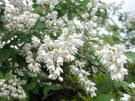

:::::::::::::::::::::::::::::::::::::::::::::::::::::::::::::::::::::::::::::::::::::::::::::::::::::
heaven kigo for early summer
uzukigumori 卯月曇 (うづきぐもり)
cloudy on the deutzia blossoms
unohanagumori, u no hana gumori 卯の花曇(うのはなぐもり)
During the time when the deutzia blossoms in Japan, there is often an overcast sky (kumori), not realy rain, but not shine either. The rainy season comes soon.
:::::::::::::::::::::::::::::::::::::::::::::::::::::::::::::::::::::::::::::::::::::::::::::::::::
Deutzia is a genus of about 60 species of shrubs in the family Hydrangeaceae, native to eastern and central Asia (from the Himalaya east to Japan and the Philippines), and Central America and also Europe. By far the highest species diversity is in China, where 50 species occur.
The species are shrubs ranging from 1-4 m in height. Most are deciduous, but a few subtropical species are evergreen. The leaves are opposite, simple, with a serrated margin. The flowers are produced in panicles or corymbs; they are white in most species, sometimes pink or reddish. The fruit is a dry capsule containing numerous small seeds. Identification of the species is very difficult, requiring often microscopic detail of the leaf hairs and seed capsule structure.
Deutzias are commonly grown as ornamental plants for their white flowers.
© More in the WIKIPEDIA !
:::::::::::::::::::::::::::::::::::::::::::::::::::::::::::::::::::::::::::::::::::::::::::::::::::
month when the deutzia is blooming
u no hana zuki 卯の花月(うのはなづき)
... uzuki 卯月 (うづき)
hana nokorizuki 花残月(はなのこりづき)month when cherry blossoms are still left in the mountains
natsu hazuki 夏初月(なつはづき)first month of summer
uzuki 四月(うづき) "fourth month"
haiku category: season
. . . . SUMMER
the complete SAIJIKI
:::::::::::::::::::::::::::::::::::::::::::::::::::::::::::::::::::::::::::::::::::::::::::::::::::::
"deutzia blossoms are rotting "(u no hana kutashi
(kudashi) 卯の花腐し
"tofu-dregs getting rotten"
 A kind of rain in the old lunar month of may, when it gets hot and warm and the tofu starts rotting soon. During the old lunar month of april and may, the rain was very long (but not yet the rainy season)
..... unohana kudashi 卯の花腐し(うのはなくだし)
..... 卯の花降し(うのはなくだし)
haiku category: heaven
 Scrambled tofu dregs are also prepared in a dish of "unohana". It is a common home food, tasting of "mother's cooking".
- widipedia: Okara and Unohana ...
緋鯉真鯉 卯の花腐しうれしくて
higoi magoi unohana kudashi ureshikute
red carps, black carps
and rain on the deutzia blossoms -
I am full of joy
. Awano Seiho 阿波野青畝
He is enjoying a rainy day at a small pond, with the fish darting and blossoms slowly falling into the pond too.
- - - - -
うの花に食傷するな時鳥
u no hana ni shokushoo suru na hototogisu
don't get indigestion
from the tofu dregs!
cuckoo
Tr. David Lanoue
. Kobayashi Issa 小林一茶 in Edo .
. Bean curd (tofu, toofu, Tōfu, dofu) 豆腐 .
**********************************
Worldwide use
*****************************
Things found on the way

卯の花月 month when the deutzia is blooming
歌川豊国 Utagawa Toyokuni
*****************************
HAIKU

卯の花も母なき宿ぞ冷じき
u no hana mo haha naki yado zo susamajiki
deutzia blossoms too
at this home without a mother -
how dreadful
Tr. Gabi Greve
Written in the 12th day of the 5th lunar month in 1687貞亨4年5月12日
Basho age 44.
On the 8th day of the 4th lunar month, the mother of his discipke Kikaku had died.
The blossoms of the fence around the house were just showing up for the memorial service.
[headnote]
'On the Thirty-fifth Day Memorial Service' [for Kikaku's mother]
tofu pulp
without a mother in the house
so dreary
Tr. Reichhold
. Kikaku, Enomoto Kikaku 榎本其角 .
(1661-1707) Takarai Kikaku 宝井其角
:::::::::::::::::::::::::::::::::::::::::::::::::::::::::::::::::::::::::::::::::::::::::::::::::::::::::::
卯の花の花なきさへうられけり
u no hana no hana no naki sae urare keri
a deutzia shrub
even without blossoms...
for sale
Kobayashi Issa
Tr. David Lanoue
u no hana ya kodomo no tsukuru tsuchi dango
deutzia in bloom
children make
mud-dumplings
Issa
Tr. David Lanoue
Kasamori Fox Shrine and mud-dumplings
:::::::::::::::::::::::::::::::::::::::::::::::::::::::::::::::::::::::::::::::::::::::::::::::::::
卯の花を めがけてきたか 時鳥
unohana o megakete kita ka hototogisu
aiming at
deutzia blossoms
little cuckoo
Masaoka Shiki , Ehime, Matsuyama
:::::::::::::::::::::::::::::::::::::::::::::::::::::::::::::::::::::::::::::::::::::::::::::::::::
the sun remains
in the deutzia flowers--
under cloudy skies
© Chiyo-Jo
Chiyo-Jo Haiku Museum
*****************************
Related words
***** Mud Dupmpling from the Kasamori Inari fox shrine
***** . uzuki yooka 卯月八日 (うづきようか) eighth day of the uzuki month
tendoobana 天頭花(てんどうばな)"deutzia blossoms"
..... tentobana てんと花(てんとばな / 天道花)
"flowers along the heavenly road"
:::::::::::::::::::::::::::::::::::::::::::::::::::::::::::::::::::::::::::::::::::::::::::::::::::::
Unohana Haiku by
. Matsuo Basho 松尾芭蕉 - Archives of the WKD .
[ . BACK to WORLDKIGO . TOP . ]
[ . BACK to DARUMA MUSEUM TOP . ]
:::::::::::::::::::::::::::::::::::::::::::::::::::::::::::::::::::::::::::::::::::::::::::::::::::::


 Posts
Posts


5 comments:
leaving the muddy road
and the blooming deutzia
behind
doro michi o dereba u no hana nakari keri
.泥道を出れば卯の花なかりけり
by Issa, 1822
In Shinji Ogawa's interpretation, Issa has left the muddy road (a good thing) but has left behind the blooming deutzia (a bad thing).
Tr. David Lanoue
http://cat.xula.edu/issa/
卯の花の花なきさへうられけり
u no hana no hana no naki sae urare keri
a deutzia shrub
even without blossoms...
for sale
Kobayashi Issa
(Tr. David Lanoue)
.
梅恋ひて卯の花拝む涙哉
梅こひて卯花拝むなみだ哉
ume koite u no hana ogamu namida kana
Longing for the plum blossoms
I pray to the white deutzia -
tearful eyes
Matsuo Basho
Tr. Shirane
.
MORE about this hokku
.
.
Kobayashi Issa
卯の花の垣根に犬の産屋哉
u no hana no kakine ni inu no ubuya kana
in the hedge of
deutzia blossoms is the dog's
hut for giving birth . . .
ubuya
http://wkdfestivalsaijiki.blogspot.jp/2010/05/obara-shrine-festival.html
.
卯の花や逢魔時の通り雨
unohana ya oomagatoki no toori-ame
deutzia blossoms -
a passing rain shower
at demon dusk
Naitoo Toten 内藤吐天 Naito Toten (1900 - 1976)
(tr. Greve)
.
- more about
oomagatoki, Ōmagatoki 逢魔時 / 大禍時 "demon dusk"
.
https://kappapedia.blogspot.jp/2017/07/omagatoki-demon-dusk.html
.
Post a Comment