::::::::::::::::::::::::::::::::::::::::::::::::::::::::::::::::::::::::::::::::::::::::::::::::::::
Cotton (wata)
***** Location: Japan
***** Season: Various, see below.
***** Category: Plant, Humanity
*****************************
Explanation
Since the early Edo period, cotton was produced mainly in the Kinnai area 畿内 and Kawachi 河内国 region and many merchants lived in nearby Osaka.
The seeds are sown in May and the picking starts after the O-Bon holidays in August.
The fields were located in the watery rice paddies on elevated earth, called handen 半田(はんでん)」or shimabata「嶋畑(しまばた).
cotton picking in the Edo period

source : 河内木綿の部屋
with more photos from the Cotton Museum of Kawachi !
- quote
Kawachi Province (河内国, Kawachi no kuni) was a province of Japan in the eastern part of modern Osaka Prefecture. It originally held the southwestern area that was split off into Izumi Province. It was also known as Kashū (河州).
Kawachi cotton was popular from the early Edo period until before World War II; it was Kawachi's top industry.
© More in the WIKIPEDIA !
wata refers to the cotton plant with more than 40 sub-species.
Gossypium spp.
momen, momenwata 木綿(もめん)
is another word for cotton コットン.
Cotton is a soft, staple fiber that grows in a form known as a boll around the seeds of the cotton plant, a shrub native to tropical and subtropical regions around the world, including the Americas, India and Africa.
© More in the WIKIPEDIA !
.......................................................................
wata 綿 floss silk
mawata 真綿 - silk floss 繭からつくった綿 -
Seidenwatte, Florettseide
flox-silk, flosh-silk.
also silk batting or wadding
- source : OED -
.......................................................................
The oil from cotton seed is used for cooking.
menjitsuyu 綿実油 cotton seed oil
Some kigo concern its harvesting and production, others things made ouf of cotton.
They come in various seasons.
:::::::::::::::::::::::::::::::::::::::::::::::::::::::::::::::::::::::::::::::::::::::::::::::::::
kigo for early summer
watanuki 綿抜(わたぬき, 綿抜き)
"take the cotton padding out"
On April first (lunar Calendar), the robes and lined kimono (awase) changed from warm winter to light summer garments.
wata o nuku, this is the original of the family name Watanuki.
mid-summer
shin mawata 新真綿 (しんまわた) new silk floss
mawata tori 真綿取り(まわたとり) picking silk floss
Seidenwatte, Florettseide
. wata maki 棉蒔 (わたまき) sowing of cotton seeds
late summer

wata no hana 棉の花 (わたのはな)
flowers of the cotton plant
. . . 綿の花(わたのはな)
watasuge 綿菅 (わたすげ) "cotton sedge"
Hare's-tail Cottongrass, Tussock Cottongrass,
Sheathed Cottonsedge
Eriophorum vaginatum. Scheiden-Wollgras
. . . CLICK here for Photos !
all summer
chijimi momen 縮木綿(ちぢみもめん)cotton crepe
momengaya 木綿蚊帳(もめんがや)
mosquito net made from cotton thread
:::::::::::::::::::::::::::::::::::::::::::::::::::::::::::::::::::::::::::::::::::::::::::::::::::
mid-autumn
wata 棉 (わた) cotton (the plant)
wata no momo 棉の桃(わたのもも) "peach of the cotton" the fluffy cotton bolls
momo fuku 桃吹く(ももふく)cotton bolls blowing
..... wata fuku 棉吹く(わたふく)
wata tori 綿取 (わたとり) harvesting cotton
watatsumi 綿摘(わたつみ)picking cotton
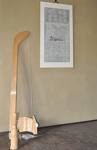
watayumi 綿弓(わたゆみ)cotton bow
wata uchi yumi 綿打弓(わたうちゆみ)bow to hit the cotton
To disentangle old cotton padding. Made of bamboo. The bowstring makes a nostalgic low sound, almost like a melody. See the haiku by Basho below.
This old custom of "hitting cotton" is still alive in India and many other countries and I remember this sound very well.

source : edoichiba.jp.menuchi...
menuchi, men uchi shokunin 綿打職人 craftsmen hitting cotton
. Edo craftsmen 江戸の職人 .

wata hosu 綿干す(わたほす)drying cotton
wata kuri 綿繰り(わたくり)turning cotton
wata kai 綿買(わたかい) buyer of cotton, cotton merchant
kigo for late autumn
shin wata 新綿 (しんわた) new cotton
. . . nii-wata 新綿(にいわた)
kotoshi wata 今年綿(ことしわた) cotton of this year
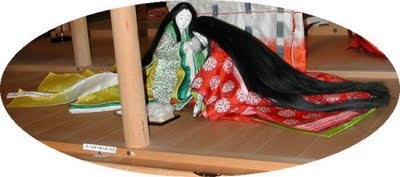
kiku no kisewata 菊の着綿 (きくのきせわた)
"chrysanthemum cotton garment"
"Chrysanthemum Covers"
kiku no wata 菊の綿(きくのわた)
. . . kiku no somewata 菊の染綿(きくのそめわた)
On the 8th of September (one day before the nineth Chrysanthemum festival) cotton silk floss covers were placed outside over the chrysanthemums to catch the evening dew. On the morning of the 9th, these garments were used to wrap the body of court ladies, a custom since the Heian Period. This was said to ward off evil and lead to a healthy ripe old age.
After this day, summer cotton garments were put away and the winter garments came into use.
Chrysanthemum (kiku)
:::::::::::::::::::::::::::::::::::::::::::::::::::::::::::::::::::::::::::::::::::::::::::::::::::::
All winter

wata-irebaori 綿入羽織(わたいればおり)
haori half-coat with cotton padding
wata 綿 (わた) cotton (garment)
momenwata 木綿わた(もめんわた), kiwata木綿(きわた)、panya パンヤ、
mawata 真綿(まわた)silk floss
... kinuwata 絹綿(きぬわた)
wata-ire 綿入 (わたいれ) (garment with) cotton padding
kosode 小袖(こそで)、nunoko 布子(ぬのこ)

watago 綿子(わたこ)"cotton child" warm undergarment
oimawata 負真綿 おいまわた "cotton garment to keep the back warm"

watabooshi 綿帽子 (わたぼうし) headdress of floss silk
. . . kazukiwata 被綿(かずきわた)
It used to be a cap to protect a woman from the cold in winter. Usually worn for a wedding now.
MORE
Winter garments to keep you warm !
:::::::::::::::::::::::::::::::::::::::::::::::::::::::::::::::::::::::::::::::::::::::::::::::::::::
New Year
kazashi no wata 插頭綿(かざしのわた)
cotton flowers for a ritual court dance
Tooka no sechi e 踏歌節会 Imperial Court Ceremony
:::::::::::::::::::::::::::::::::::::::::::::::::::::::::::::::::::::::::::::::::::::::::::::::::::::
. Momen Kaido 木綿街道 The Cotton Road
Hirata-cho, Izumo 出雲市平田町, Shimane prefecture
*****************************
Worldwide use
Georgia (USA)
kigo for winter
white christmas
along the road home
drifts of cotton
Judith Gorgone
WKD Facebook, November 2009
:::::::::::::::::::::::::::::::::::::::::::::::::::::::::::::::::::::::::::::::::::::::::::::::::::::
Yemen
Cotton plants blossom in Yemen in the coastal plains; from summer to early autumn.
I thought it's only autumn, using the stored rain water for planting and growing.
The blossoms change their color in two days from white to pink in red/purple.
autumn kigo: cotton harvest, cotton bolls
cotton blossoms -
white when I arrived
red when I left
Heike Gewi
YEMEN SAIJIKI
*****************************
Things found on the way
Daruma Wata だるまわた shop sign
Darumax company in Fukuoka prefecture
They make bedding out of cotton.


http://www.darmax.co.jp/
株式会社ダルマックス in Daruma Museum
Otafuku Cotton and a Daruma shop sign

At the train station of Ohi Honsen, Kumamoto
JR豊肥本線(ほうひ ほんせん
Daruma cotton wool ダルマ. 綿しつけ糸
Tenugui 手ぬぐい Small Cotton Towels
With Daruma San as pattern
YUKATA : light summer garment
With Daruma San as pattern

Furoshiki 風呂敷 Cotton Wrapper Cloth
:::::::::::::::::::::::::::::::::::::::::::::::::::::::::::::::::::::::::::::::::::::::::::::::::::::
. kazukewata, kazuke wata 被綿(かずけわた)
"covering cotton" .
During the ceremony
butsumyooe 仏名会 (ぶつみょうえ) Chanting of the Buddhas' Names
The priests clad themselves in white cotton robes to express a pure heart.
:::::::::::::::::::::::::::::::::::::::::::::::::::::::::::::::::::::::::::::::::::::::::::::::::::::
Matsuzaka momen 松坂木綿 cotton from Matsuzaka
(the Ise Shrine was nearby)
Dealers transporting it to Edo made a fortune.
- quote -
Japanese Indigo dyeing "MATSUSAKA MOMEN" 松阪もめん
In the latter half of the fifth century weaving technologies called "AYAHATORI" 漢織 aya-hataori and "KUREHATORI"呉織 kure-hataori were developed in the present day city of Matsusaka. Matsusaka became a very important centre in Japan for fabric production due to the introduction of these new technologies.
In the year 698 textiles produced in Matsusaka were commissioned as regular offerings to the God Amaterasu at Ise Shrine. When Cotton originally from Egypt and India found its way to Japan in the 15th century, it became immediately popular among the public in Japan. It was found that conditions in Matsusaka were very good for production of this new material. This new material and the weaving technologies already in place in Matsusaka led to the birth of "Matsusaka momen" in the early 16th century. The artistic taste of the women producing this new cloth coupled with the skill of Merchants from Matsusaka led to annual sales in stores in Tokyo of 500,000 units equivalent to half of the population of Edo.

The distinctive stripped pattern of Matsusaka momen which also became know as "Matsusaka jima" 松阪縞 found its roots in a cloth called "RYUJOUFU" 柳条布 originally from Vietnam. Ryujoufu as the name literally suggests resembles the strong thin pattern of the veins running through the willow tree leaves.
The thin striped patterns called "SENSUJI" 千筋 and "MANSUJI" 万筋 became the traditional patterns for Matsusaka momen. Even in present day when Kabuki actors wear a stripped kimono they refer to it as wearing a Matsusaka.
Such is the powerful association between Matsusaka momen and the stripe. "IKI" a concept held in great regard by people in Edo was a way of life in which they acted and appeared sophisticated, educated but cool without looking gaudy and outlandish.
Matsusaka momen stripes when viewed from a distance appearing almost invisible but their delicacy and beauty appearing only when view close to, fit in perfectly with the IKI concept. So the people of Edo became to regard Matsusaka momen as a symbol of IKI. The changes in the cloths color due to washing only adding to its IKI value. The manufacturing process of Matsusaka momen is now regarded as a national treasure. Old people often say cotton is something they can’t live without even for one day, it is such a powerful spiritual asset.
- source : marukawashoooten.com -
:::::::::::::::::::::::::::::::::::::::::::::::::::::::::::::::::::::::::::::::::::::::::::::::::::::
. Doing Business in Edo - 江戸の商売 .

source : 1000ya.isis.ne.jp
takani momen uri 高荷木綿売り selling cotton
cotton cloth seller
He had the rolls of cloth piled up high for the customers to see it easily and make their choice. By putting up different patterns every day before walking the streets of Edo, the vendors could choose their customers.
Image by 松野霞城 Kajo Matsuno Kajo
- reference source : tobunken.go.jp/materials -
:::::::::::::::::::::::::::::::::::::::::::::::::::::::::::::::::::::::::::::::::::::::::::::::::::::
wata-ame わたあめ / 綿あめ / 綿飴 cotton candy
Zuckerwatte
*****************************
HAIKU
- - - - - Matsuo Basho - - - - -
綿弓や琵琶になぐさむ竹の奥
わたゆみやびわになぐさむたけのおく
wata yumi ya biwa ni nagusamu take no oku
watayumi
this cotton bow -
comforting like a biwa lute
deep in the bamboo (grove)
Matsuo Basho
Tr. Gabi Greve
from Nozarashi kiko (Records of the Weather-Exposed Skeleton)
Katsuragi, Nara 奈良葛城.
One year later, he visited here again for the New Year and wrote
. shoshun mazu sake ni ume uru nioi kana .
MORE - biwa lute hokku by
. Matsuo Basho 松尾芭蕉 - Archives of the WKD .
quote
"Entering the country of Yamato, we came to a place called Amid the Bamboo Groves (Take no uchi) at the province of Katsuge. Because this was my company Chiri’s birthplace, we spent several days there resting our feet. There was a house deep amid the bamboo groves.
The sounds of the cotton bow
are comforting like lute
deep in the bamboo groves."
The comparison of the sounds of the cotton bow to music reminds us of the poem on the rice-planting song, in which listening to the song is described as fûryû. Although the poet does not say so explicitly, the theme of this poem is also one of fûryû. The connection between this verse and the fengliu tradition is made more apparent in another piece of short prose that introduces the circumstance of the poem.
"AMID BAMBOO GROVES
When I was staying at a place called Take no uchi—Amid the Bamboo Groves—in Yamato, the village chief often came to see me in the mornings and evenings, I assume to comfort me in the tedium of my travels. This gentleman is truly unusual. His mind wanders freely in the high while his body mingles with such common people as grass mowers, woodcutters, and hunters. Carrying a hoe, he enters the garden of Tao Qian; leading an ox, he identifies himself with the recluse at Mount Ji. He is diligent and tireless at his duties, and he also appears humble, taking pleasure in poverty. This village chief must be the kind of man who seeks retreat amid a city and really attains it.
The sounds of the cotton bow
are comforting like lute
deep in the bamboo groves."
Although the village chief is not a recluse in the strict meaning of the word, this does not stop Bashô from linking him to Tao Qian and other famous Chinese recluses, nor from praising him for the detachment of his mind. Mount Ji, a mountain in modern China’s Henan province, is known as the place where the famous recluses Xu You and Cao Fu lived.
As we have seen, the Zhuangzi describes Xu as a lofty recluse who valued individual freedom more than power and wealth. Without proper knowledge of the spirit of xiaoyaoyou and its embodiment in the Chinese recluse tradition, the meaning of Bashô’s narrative in the account is difficult to understand. However, Bashô and his disciples seem to have seen Daoist ideals and the recluse taste within one aesthetic tradition.
In their vocabulary, “recluse” represents sheer poetic qualities, and to discover these qualities and compose poems on them are acts of fûryû 風流 FURYU. In this meaning, Bashô’s short haibun above is more an assertion of the poetics of fûryû than a depiction of the village chief.
source : Basho-and-the-Dao - Peipei-Qiu
.................................................................................
初霜や菊冷え初むる腰の綿
hatsu shimo ya kiku hie somuru koshi no wata
this first frost
makes the chrysanthemumss freeze -
a cotten wrapper around my hip
Tr. Gabi Greve
Written in late autumn of 1692 元禄5年晩秋
Collection Araoda 荒小田
This hokku has the cut marker YA at the end of line 1, but lines 1 and 2 belong together.
Basho stayed with Boncho and his wife Ukoo 羽紅, who prepared the warm garment for him.
He is making a bit of fun of himself for getting older.
koshiwata 腰綿 a warm cotten wrapper / blanket for the lower parts of the body to keep warm in winter. Well-loved by elderly men in the Edo period.
Sometime a kind of cover was also put over the chrysanthemum flowers (kisewata 着せ綿) to protect them from early frost.
. Nozawa Boncho 野沢凡兆 and Uko 羽紅 .
.................................................................................
名月の花かと見えて綿畠
meigetsu no hana ka to miete watabatake
the full moon
looks almost like a blossom -
this cotton field
Tr. Gabi Greve
looking as though
the harvest moon had blossomed,
cotton field
Tr. Makoto Ueda
in the bright moonlight what appeared
like flowers is a cotton field
source : Transactions of the Asiatic Society of Japan
. Matsuo Basho 松尾芭蕉 - Archives of the WKD .
:::::::::::::::::::::::::::::::::::::::::::::::::::::::::::::::::::::::::::::::::::::::::::::::::::
河内女の宿に居ぬ日やきじの声
Kawachi-me no yado ni inu hi ya kiji no koe
the Kawachi weaver girls
are not at home -
voice of the pheasants
Tr. Gabi Greve
Kawachime refers to the girls who had to weave cotton, since the Kawachi-plain 河内平野 (now Osaka plain) was famous for cotton plants.
. Yosa Buson 与謝蕪村 in Edo .
:::::::::::::::::::::::::::::::::::::::::::::::::::::::::::::::::::::::::::::::::::::::::::::::::::
綿採りの唄声ありと思ふのみ
watatori no utagoe ari to omou nomi
the song
of the cotton pickers -
this is all there is
Nakamura Teijo 中村汀女
(1900 - 1988)
:::::::::::::::::::::::::::::::::::::::::::::::::::::::::::::::::::::::::::::::::::::::::::::::::::
新綿や駱駝連ねて運ぶとは
niiwata ya rakuda tsurarete hakobu to wa
Nomura Kishuu 野村喜舟
(1886 - 1983)
:::::::::::::::::::::::::::::::::::::::::::::::::::::::::::::::::::::::::::::::::::::::::::::::::::::
卯の花に布子の膝の光哉
u no hana ni nunoko no hiza no hikari kana
the deuzia blossoms
light up the quilt
on my knees
Kobayashi Issa, 1821
*****************************
Related words
***** Cotton fly (watamushi) Japan
Snow fly (yukimushi), snow firefly (yuki hotaru, yukibotaru)
***** Silk (kinu). Many related kigo. and Mulberry (kuwa)
***** watayuki 綿雪(わたゆき) "cotton snow"
kigo for all spring
SNOW (yuki) and related kigo
***** watagoori 綿氷(わたごおり)"cotton ice"
kigo for late winter
ICE (koori) and related kigo
Autumn and farmers work
:::::::::::::::::::::::::::::::::::::::::::::::::::::::::::::::::::::::::::::::::::::::::::::::::::::::::::::::::::::::::::
[ . BACK to DARUMA MUSEUM TOP . ]
[ . BACK to WORLDKIGO . TOP . ]
- #watacotton #wata #momen #cotton -
:::::::::::::::::::::::::::::::::::::::::::::::::::::::::::::::::::::::::::::::::::::::::::::::::::::::::::::::::::::::::::


 Posts
Posts


5 comments:
a nice translation, Gabi san and thanks for the notes as well.
We can never learn enough from the great haiku masters.
RDW
Moka momen, Mashiko Momen 益子木綿
- - -
4. History: As cotton was widely planted in Mashiko-Moka area, cotton fabrics were woven in the late Edo Period and marketed as "Moka Momen"(Moka cotten). It was the representative white cotton fabric of the Edo Period. Moka was the center for trading cotton in this area, thus "Moka Cotton."They were delicate and silk like fabrics as cotton was hand spun and hand woven with the influence of "Yuki Tsumugi" pongee produced in Yuki, which is located near Moka. Special spinning wheels were used for producing thin hand spun threads. The production reached its height in the late Edo Period.
However, it decreased drastically in the Meiji Period when machine spun cotton was imported and the Nagoya area began producing cotton fabrics. In the early Showa Period there was no production. An association for the maintenance and development of the Moka Momen started in 1986 reviving the tradition with full cooperation of local citizens. "Mashiko Momen" was originated by Hiroshi Higeta, a dyer who inherited 200 years of tradition, in 1960 with the aim of maintaining the tradition of Moka Cotton and indigo dyeing. "Oka Momen" which is used today for summer dishabille, is machine woven cotton, resembling Moka Momen.
.
http://www.kimono.or.jp/dictionary/eng/mookamomen.html
.
Resource about material
Ojiya-chijimi
Authentic Ojiya-chijimi and Echigo-jofu:
Important Intangible Cultural PropertiesDetails.
Ojiya-tsumugi and Katakai-momen
Echigo Region: Weaves
Tokamachi Region: Weaves and Dyes
Shinano Region: Weaves
Okinawa: Weaves and Dyes
Kihachijo, Yoshino-kanto,
Gunjo-tsumugi and Other Fabrics
http://www.nishiwaki-ojiya.com/en/products/
.
天竹神社 Tenjiku Jinja Shrine of the Cotton Deity
愛知県西尾市天竹町池田
Cotton Festival (Menso-sai)
4th Sunday of October
Tenjiku Shrine
Tenjiku Shrine is the only shrine in Japan which enshrines the god of cotton.
In the festival, priests pick the cotton with traditional tools (watauchi-yumi), which is a process of after using cotton gin, in traditional rites.
This is a very peaceful festival.
Nishio City is the cradle of Mikawa Cotton.
For Tenjiku-jin (Indian) drifted ashore to the beach of Nishio with cotton seeds,
local people carry boat-shaped portable shrine called Funa-mikoshi, and
pray for long life.
.
http://kikuko-nagoya.com/html/menso-festival.html
.
momen 木綿 cotton in the Edo period
.
https://edoflourishing.blogspot.com/2020/08/cotton-momen.html
.
Post a Comment